


CompactHabit innovates with wood in three-dimensional modules
28 January, 2026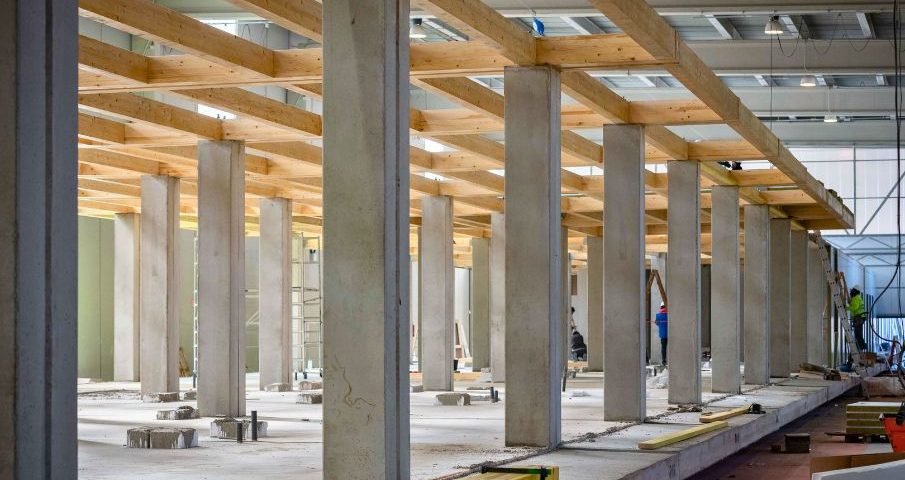
CompactHabit has embraced the use of wood in its modules built through industrialized construction, providing solutions that are more sustainable and efficient. The main challenge—and the core of this innovation—has been the integration of wood in the fabrication of three-dimensional modules for constructing multi-story buildings.
Wood offers a more sustainable solution, both for the intrinsic properties of the material and for enabling manufacturing with fewer processes and less additional material usage. Compared to other materials, wood reduces environmental impact, both through a lower carbon footprint and reduced energy consumption during processing. Additionally, it is a renewable, recyclable, and biodegradable material.
Sustainability goes beyond the material itself. Wood is naturally fire-resistant, eliminating the need for additional fireproofing treatments. It also allows for greater precision in manufacturing, cleaner joints, and, due to its nature, the possibility to leave beams exposed, adding aesthetic value to the building. This avoids the need for false ceilings, as is often required in metal structures.
Three-dimensional modules with wood roofing have already been successfully used in various projects, such as the residential building at Lleida-Alguaire Airport, the Santa Susanna school dining hall, and the modular extension of the CAP de Manlleu.
CompactHabit’s industrialized construction represents, in itself, an innovation in the sector, as it is more efficient and sustainable compared to traditional construction. Manufacturing in a controlled factory environment allows for better process management, reduced material waste, and more efficient recycling. It also minimizes the visual and noise impact on the final site, as most of the work is carried out at the factory. The use of wood in the module structures further enhances the system’s sustainability.